

e-Stamping
How e-Stamping Works
A practical, step-by-step guide to preparing, submitting, receiving and retaining an e-Stamp transaction.
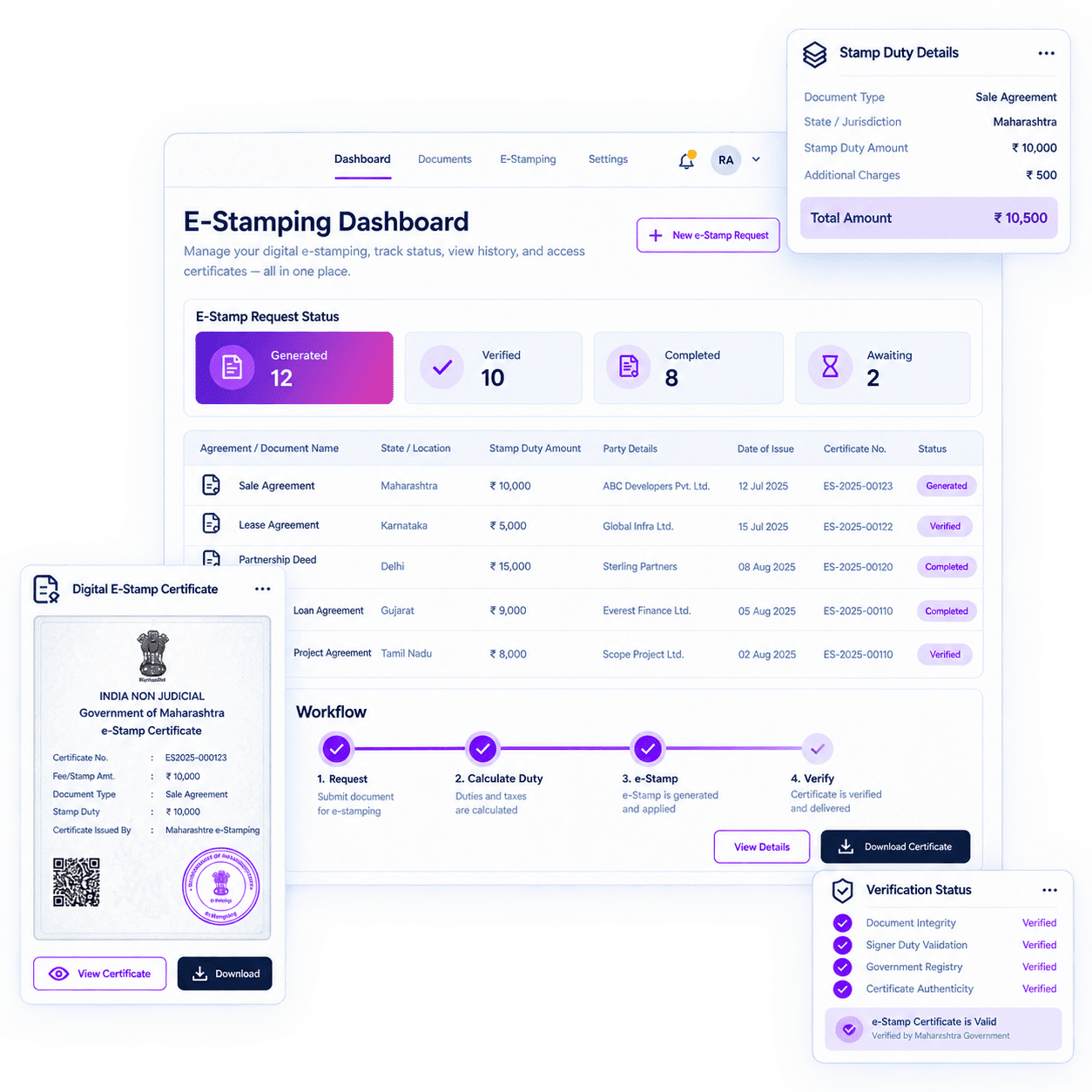
The e-Stamping process begins by identifying the correct jurisdiction, document type and duty. The request is then submitted through the applicable authorised route, the certificate is issued or procured, and the underlying document is executed separately.
The Process
Identify the jurisdiction
Classify the document
Determine the duty
Prepare transaction details
Provide accurate party names, address and transaction or consideration information where required.
Select the fulfilment mode
Use the supported digital, eStamp-Physical, traditional physical or State-specific route.
Review and approve
Fund the transaction
Submit the request
Receive the result
Receive a digital certificate, scanned copy or status update, depending on the mode.
Complete physical delivery
Execute the document
Retain the record
Information Quality
The operational process depends on complete and accurate information. Party names, State, article, duty, value and related particulars should be reviewed before submission. Once an instrument is issued, independent correction may not be available and any cancellation or refund is subject to the relevant authority.
What Can Delay a Request
- Incomplete or inaccurate information.
- Missing internal approval or supporting documentation.
- Insufficient prepaid balance.
- State-system or authorised-channel availability.
- Banking or payment processing.
- Collection-centre availability.
- Denomination or stock availability.
- Public holidays, regulatory requirements and courier serviceability.
RazorSign e-Stamping
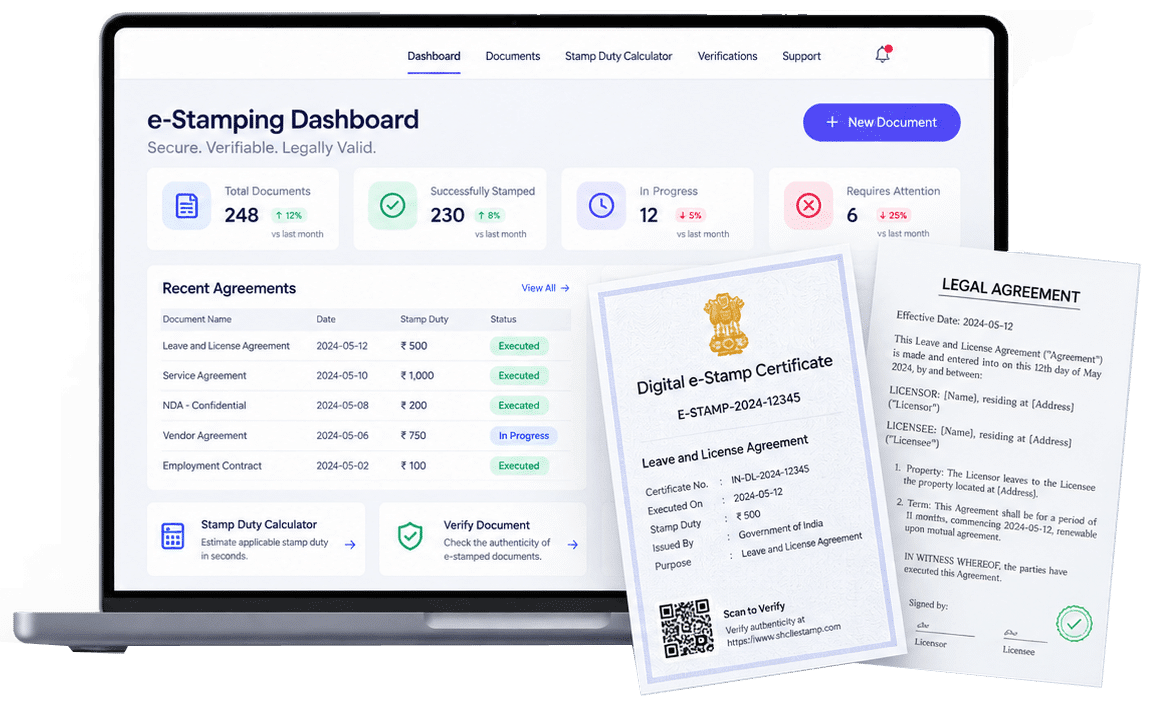
RazorSign enables enterprises to initiate and manage stamp-duty fulfilment inside the document and contract workflow. Depending on the mechanism available for the relevant State or Union Territory, fulfilment may be digital, eStamp-Physical, traditional physical or State-specific physical. Signing and stamping remain separate processes, while transaction status, available records and the final executed document can remain connected to the contract workflow.
What Our Clients Say About Us!
Trusted and Secure
RazorSign has been validated by leading business analyst firms, industry associations, media outlets, partners and customers
FAQs
How long does e-Stamping take?
The source model lists digital generation as typically instant and up to two business hours, while physical modes take longer. All timings are indicative and dependency-based.
What happens if funds are debited but issuance is not confirmed?
The transaction should be reconciled based on the status from the relevant authority or service channel. Any credit or refund depends on that channel.
Can information be changed after issuance?
Correction and cancellation depend on the relevant State or authority. Information should be verified before submission.
Does the e-Stamp need to be couriered?
Digital modes ordinarily do not require physical procurement. Physical modes may require collection and courier.
What records should a business retain?
Retain the certificate, underlying document, execution history, transaction reference and relevant approvals according to the organisation’s retention policy.
Important Information
This page provides general information about e-Stamping and RazorSign-supported fulfilment workflows. It is not legal, tax, regulatory or professional advice. Stamp duty, document classification, admissibility, execution, registration, cancellation, refund and related requirements depend on the applicable law, State or Union Territory, transaction and document. Customers should obtain advice from qualified professionals and verify current requirements with the relevant government or authorised authority before acting. RazorSign and PracticeLeague facilitate technology and fulfilment workflows and do not independently issue government e-Stamp certificates or act as a government authority.